
What is a surname
A surname is the part of a person's name that identifies the family they belong to, that is, their line of descent.
In Italy the surname is normally written immediately after the first name. Sometimes, for practical reasons such as lists and official forms, it is written before the first name.
History of the surname
There is no single period in history to which the birth of the surname can be traced. According to ancient Chinese tradition, the first surnames date back to around 2850 BC, under the legendary emperor Fu Xi.
In Roman times, Italians used three names:
- praenomen: comparable to today's first name;
- nomen: despite the misleading term, the equivalent of today's surname, shared by the whole family;
- cognomen: close to what we would now call a nickname.
After the year 500 it became more and more common to use a single name, called supernomen, instead of nomen and cognomen.
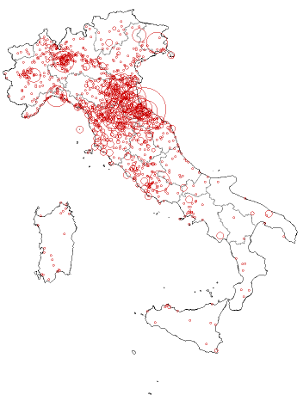 The first surnames in Italy appeared towards the end of the 10th century, and they were used by the nobility.
After the strong population growth of the 10th and 11th centuries, it became necessary to identify each person unambiguously and record them. Registration took place at the town halls.
Surnames were formed in different ways:
- from the place of origin (for example: Dal Colle, Monti, Piacentini, ...);
- from a trade (for example: Fabbri, "smiths", Cacciatori, "hunters", Barbieri, "barbers", ...);
- from nicknames describing physical features (for example: Biondi, "blond", Gobbi, "hunchbacked", Bassi, "short", Mancini, "left-handed", ...);
- from the name of the founder of the family (for example: Di Francesco, Di Matteo, ...).
Over these centuries the modern surname spread throughout Europe.
The Council of Trent, whose decrees were confirmed in 1564, required every parish to keep a register of baptisms recording first name and surname.
Today, under Italian law, a wife keeps her own birth surname when she marries. Since a 2022 ruling of the Constitutional Court, children receive the surnames of both parents, in the order the parents agree on, unless the parents agree to give only one of them.
| Share on WhatsApp |